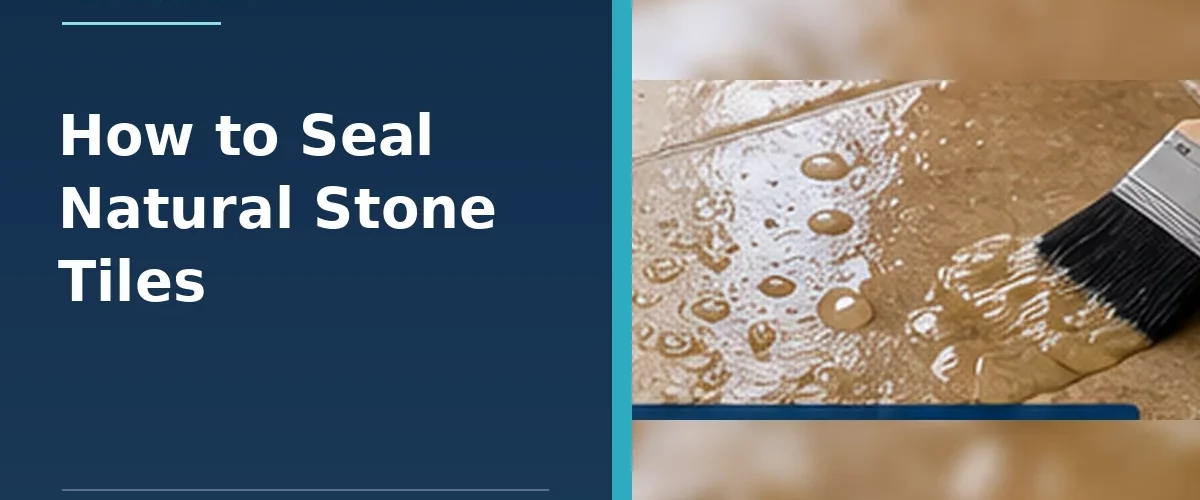
To seal natural stone tiles, first identify the stone and finish, make sure it is clean and completely dry, then apply a compatible stone sealer exactly as its manufacturer specifies. Many absorbent stones benefit from a penetrating impregnating sealer, but not every stone or finish needs the same treatment—and sealing does not make stone waterproof or maintenance-free.
Which natural stone tiles need sealing?
Limestone, travertine, sandstone, slate, marble and granite have different porosity and surface properties. A highly polished, dense stone may absorb little sealer, while a honed limestone may absorb much more. The stone supplier’s instructions are the starting point.
What types of sealers are available?
| Type | Typical effect |
|---|---|
| Penetrating/impregnating sealer | Absorbs into suitable stone and helps reduce water- or oil-based staining without necessarily forming a visible surface film. |
| Colour-enhancing sealer | May deepen colour or produce a wet-look effect; always test because the change can be difficult to reverse. |
| Topical coating | Forms a surface film; maintenance, slip resistance and wear implications need careful consideration. |
Do you seal natural stone before grouting?
For many porous stones, the manufacturer recommends a suitable pre-grout sealer or grout-release treatment to help prevent pigment staining. This may be followed by further sealing once grout and surfaces are cured. Follow the exact sealer instructions; excessive sealer or sealing too early can leave a patchy film or interfere with adhesive and grout.
How to seal natural stone tiles step by step
- Identify the material. Confirm whether it is limestone, travertine, slate, marble or another stone, and check any factory treatments.
- Choose an approved sealer. Make sure it suits the stone finish, room, slip requirements and expected water or oil exposure.
- Test a spare tile. Check for colour changes, uneven absorption and residue after full drying.
- Clean the stone carefully. Use a stone-safe cleaner and remove adhesive, grout dust or residues first. Avoid acidic cleaners on acid-sensitive calcium-based stones.
- Let the surface dry. Any remaining moisture may interfere with penetration or cause clouding; follow the product’s conditions.
- Apply evenly. Use the specified cloth, applicator or brush, working in small areas and respecting the recommended quantity.
- Remove excess on time. Do not allow unabsorbed impregnator to harden as a shiny, sticky or cloudy surface layer.
- Allow curing and check coverage. Keep foot traffic, water and cleaning away for the prescribed period and recoat only where the product instructs.
How often should you reseal stone?
There is no universal annual schedule. It depends on stone porosity, foot traffic, cleaners and the sealer used. Look for changes in liquid absorption and follow the supplier’s maintenance or periodic testing procedure. A water-drop test on a spare tile or inconspicuous area can indicate whether the protective effect has diminished, but it is not a complete performance test.
Common sealing mistakes
- Sealing dirt or dampness beneath the treatment.
- Using a household acid cleaner on marble or limestone.
- Applying so much impregnator that excess dries as a film.
- Assuming a sealer makes a shower waterproof.
- Ignoring how colour enhancers or topical coatings may change the finish.
Frequently asked questions
Does porcelain tile need natural stone sealer?
Usually not. Glazed porcelain is not natural stone, and dense porcelain normally does not need an impregnating stone sealer, though specialist textured-surface treatments may exist.
Can you seal marble tiles?
Many marble finishes can be treated with an appropriate stone-specific impregnator, but always test and follow the stone supplier’s instructions.
Is sealed natural stone waterproof?
No. Sealer reduces staining and liquid uptake; wet rooms still need properly designed waterproofing beneath the tiles.
Why did my sealer dry cloudy?
Excess product, trapped moisture, incompatibility or inadequate buffing can cause haze. Consult the sealer manufacturer before applying further products.
Read our tile cleaning guide. Further information: TileMaster Home Care stone sealer guidance.