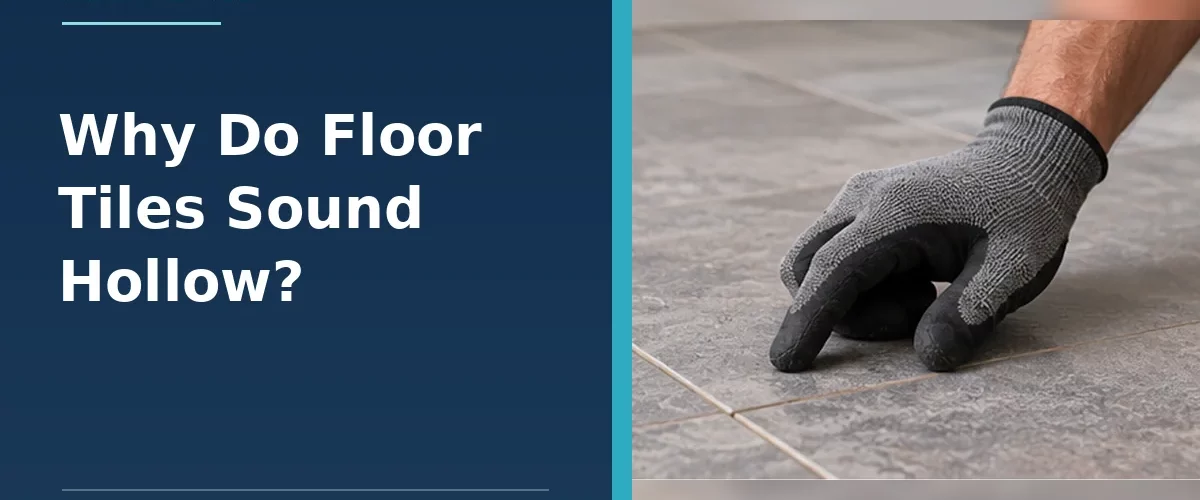
A hollow sound when you tap a floor tile can indicate a void beneath it, but the sound alone does not prove that the tile is loose or about to fail. Different substrates, membranes, cavities and tile sizes can all affect how a floor sounds. The most important clues are whether the tile moves, whether grout is cracking and whether the hollow area is growing.
Five possible reasons for a hollow tile
1. Gaps or poor adhesive coverage
Unevenly applied adhesive, a skin that formed before tiles were bedded, or failing to bed larger tiles properly can leave air pockets. A void can change the noise when tapped and, in high-load areas, may make the installation more vulnerable.
2. Loss of adhesion
Adhesive may not have bonded correctly to the tile or substrate because of dust, moisture, incompatible materials or movement. A tile that rocks when stepped on is a much stronger warning sign than sound alone.
3. An uncoupling or other intermediate layer
Some correctly installed membranes and floor constructions produce a different acoustic response from tiles fixed directly to solid concrete. A hollow note with otherwise secure tiles is not automatically defective.
4. Movement in a timber floor
Deflection can stress the adhesive and grout. Loose floorboards and under-supported sheet material should be investigated, especially where cracking runs across several tiles.
5. Cracking, moisture or a weak screed
If the screed beneath the tile is friable, damp or cracking, the surface itself may be failing. Damp patches, loose grout and widespread sounds can point to a larger issue than one poorly bedded tile.
How to check a hollow-sounding tile safely
- Compare several tiles. Tap gently with a non-marking object; listen for differences rather than hitting hard enough to damage the surface.
- Check for movement. Look for a raised edge, rocking tile or grout that opens when someone steps close to it.
- Inspect the joints. Loose, crumbling or repeatedly cracked grout supports the case for a bonding or movement problem.
- Look for water damage. In a bathroom or kitchen, investigate discolouration, dampness or leaks before attempting a repair.
- Record the pattern. One stable hollow-sounding tile is different from an expanding zone with multiple moving tiles.
Does a hollow tile need replacing?
Not necessarily. A securely bonded tile with no cracks or movement might be monitored. A rocking, broken or repeatedly cracking tile should be investigated and often needs to be lifted and rebedded after correcting the underlying cause. Avoid ‘injecting glue’ into random holes without knowing the floor construction or waterproofing details; drilling can damage membranes and pipework.
How to repair a genuinely loose floor tile
When a tile is actually loose, carefully remove it, assess the old adhesive and supporting substrate, and confirm that the cause of movement or moisture has been resolved. Install the replacement with a suitable adhesive and the necessary bed coverage, keeping the appropriate joints. Our loose tile repair guide gives a fuller overview.
When to get a professional inspection
Seek a competent tiler’s advice if multiple tiles move, there are cracks crossing many joints, water is escaping, or a hollow patch spreads across a large area. If the substrate is structurally unstable, a surface repair is unlikely to last.
Frequently asked questions
Why does a tile sound hollow but not move?
The tile may be over a gap, membrane or different substrate layer, or may have a partial bond. Sound is only one diagnostic clue; check its stability and surroundings.
Will hollow tiles eventually crack?
Not always. Risk depends on tile strength, load, size and how much support is missing. Tiles carrying concentrated loads over gaps face greater risk.
Can I fill hollow tiles with grout?
Grout is designed for joints, not to restore the structural bedding under a floor tile. If adhesion has failed, the tile needs proper assessment.
Does tapping a tiled floor damage it?
Light tapping with a suitable non-marking tool should not, but striking tiles hard can chip or crack them.
For floor tiling guidance see The Tile Association FAQs and the product guidance for the chosen adhesive and substrate.